
In solar photovoltaic (PV) systems, mounting structures form the backbone of the entire installation. They provide support, stability, and proper orientation to solar panels, ensuring maximum solar electricity generation and long-term durability.
Choosing the right mounting structure is crucial for installers and EPC professionals, as it directly affects system performance, safety, and solar panel system cost. Proper selection and installation of mounting structures are essential for efficient renewable solar systems.
This blog provides a complete guide to different types of mounting structures used in solar PV systems, along with their applications, advantages, and best practices.
What are Mounting Structures in Solar PV Systems?
Mounting structures are frameworks that hold solar panels in place and position them at the correct angle and orientation.
They are designed to:
- Withstand environmental loads (wind, rain)
- Maintain panel alignment
- Ensure structural stability
- Maximize solar electricity generation
Importance of Mounting Structures
Proper mounting structures ensure:
- Efficient solar electricity generation
- Long-term durability
- Safety and stability
- Reduced maintenance
- Optimized cost of solar per kWh installed
Poor mounting selection can increase solar installation charges and reduce system efficiency.
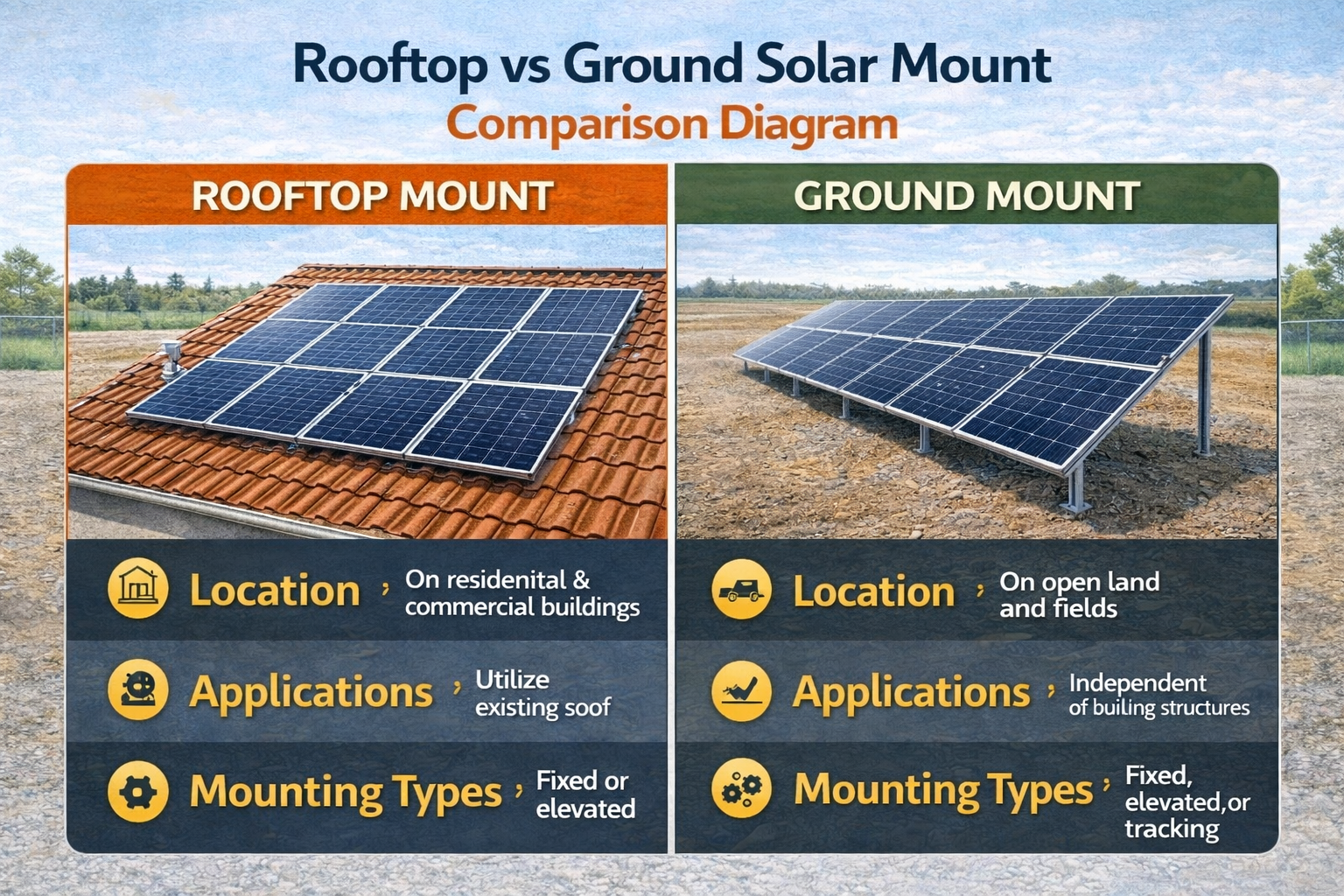
Types of Mounting Structures in Solar PV Systems
1. Fixed Tilt Ground-Mounted Structure
Description
- Panels are installed on structures with a fixed tilt angle on the ground.
Advantages
- Simple design
- Low maintenance
- Cost-effective
Applications
- Solar plant installations on open land
2. Rooftop Mounting Structures
Description
- Structures installed on building rooftops.
Types
- Flat roof mounting
- Sloped roof mounting
Applications
- Solar panel in rooftop systems for homes and commercial buildings
3. Ballasted Mounting Structure
Description
- Uses weights instead of drilling into the surface.
Advantages
- No roof penetration
- Easy installation
Applications
- Flat roof installations
4. Elevated Mounting Structure
Description
- Panels are installed at a height above ground or the roof.
Advantages
- Better airflow
- Space utilization below panels
Applications
- Parking lots, terraces
5. Tracking Mounting Structure
Description
- Panels move to follow the sun.
Types
- Single-axis tracking
- Dual-axis tracking
Advantages
- Higher energy output
Applications
- Large-scale solar plants
6. Pole-Mounted Structure
Description
- Panels are mounted on poles.
Advantages
- Suitable for small installations
- Adjustable tilt
7. Floating Solar Structure
Description
- Panels are installed on water bodies.
Advantages
- Saves land space
- Reduces evaporation
8. Building-Integrated Photovoltaics (BIPV)
Description
- Solar panels integrated into building materials.
Advantages
- Aesthetic integration
- Space-efficient
Factors Affecting Selection of Mounting Structures
1. Site Type
- Ground-mounted
- Rooftop
2. Roof Type and Condition
- Determines a suitable mounting system.
3. Wind Load
- High wind areas require stronger structures.
4. Budget
- Cost impacts structure selection.
5. Maintenance Requirements
- Some structures require more maintenance.
6. Energy Requirements
- Tracking systems provide higher output but cost more.
Materials Used in Mounting Structures
1. Galvanized Steel
- Strong and durable
- Corrosion-resistant
2. Aluminum
- Lightweight
- Easy to install
3. Stainless Steel
- High durability
- Used in harsh environments
Installation Considerations
1. Alignment and Orientation
- Ensure maximum sunlight exposure.
2. Tilt Angle
- Optimize for location.
3. Structural Stability
- Ensure a strong foundation and support.
4. Safety Compliance
- Follow guidelines from the Ministry of New and Renewable Energy.
Impact on Solar Panel System Cost
Mounting structures influence:
- Material cost
- Installation complexity
- Maintenance cost
- Solar installation cost per kWh
Efficient structure selection reduces solar energy installation cost.
Conclusion
Selecting the right type of mounting structure is crucial for the success of any solar PV installation. By understanding various structure types and their applications, installers can ensure stability, efficiency, and durability of the solar system.
Proper mounting design and installation are key to achieving optimal performance in solar PV systems. Additionally, compliance with guidelines from the Ministry of New and Renewable Energy ensures safety and reliability.
With the right mounting structure, solar professionals can optimize solar panel system cost, enhance solar electricity generation, and contribute to sustainable solar energy for home use and large-scale renewable solar solutions.
FAQs
Q1. What is the role of mounting structures in solar PV systems?
Ans: They support solar panels and ensure proper alignment and stability.
Q2. Which mounting structure is best for rooftop systems?
Ans: Rooftop mounting structures, including ballasted systems, are commonly used.
Q3. What are tracking systems in solar PV?
Ans: They are structures that follow the sun to increase energy output.
Q4. How do mounting structures affect solar panel system cost?
Ans: They impact material, installation, and maintenance costs.
Q5. Are mounting structures important for system efficiency?
Ans: Yes, proper structures improve energy generation and system performance.
Fixed Structure – Solar Mounting Post Installation Guide
A step-by-step guide to solar mounting post installation for fixed structures, covering alignment, positioning, and best practices for durable solar foundations.

Sir! Solar Mein Itna Chalta Hai!” When to Reject a Site: The Truth About Shadow Analysis
Discover the importance of solar site assessment and shadow analysis to optimize rooftop solar performance, prevent shading losses, and maximize energy generation.
Battery Bank Installation in Solar Projects: Site Selection & Best Practices
Battery banks are essential for energy storage in solar projects. This guide explains site selection, installation procedures, safety measures, and best practices for solar battery systems.
PV System Maintenance Tools & Equipment Guide
A complete guide to performing the solar PV anti-islanding test, ensuring safe grid-connected operation, regulatory compliance, and reliable inverter performance.

Solar Radiation on a Tilted Surface: Importance & Impact on Solar Output
Solar radiation on a tilted surface directly affects how much energy a solar panel produces. Learn why tilt angle matters and how it impacts solar output.
Inverter-Wise Solar Generation for C&I Plants
Discover how inverter-wise solar generation monitoring helps commercial and industrial (C&I) solar plants identify underperforming inverters, detect faults early, compare performance, and improve overall energy generation.
Solar Electrical Installation Toolkit: Inspection & Usage Guide
A complete guide to the electrical installation toolkit for solar installers, including inspection procedures, tool usage, and safety practices.
Earthing and Lightning Protection Required for Solar Installation – Complete Guide for Solar Installers
Earthing and lightning protection are critical safety components in solar PV installations. This guide explains their importance, types, components, and best practices for solar installers.