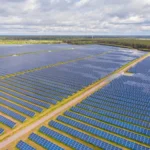
As electricity expenses continue to rise, more organizations are exploring solar financing for businesses to transition toward clean and cost-effective energy. While solar power offers long-term savings, the initial solar installation cost can sometimes be a challenge for companies. This is where structured solar financing solutions enable businesses to adopt renewable energy without straining cash flow.
From CAPEX loans and OPEX models to solar PPAs and green financing schemes, companies today have multiple flexible options to invest in commercial and industrial solar power systems.
What Is Solar Financing for Businesses?
Solar financing refers to financial models and funding mechanisms that help companies install solar energy systems by spreading or eliminating upfront costs. Instead of paying the entire project cost at once, businesses can choose loans, leasing structures, or third-party investment models.
These financing options are commonly used for:
- Manufacturing units
- Warehouses and logistics hubs
- Corporate offices and IT parks
- Hotels and hospitals
- Shopping malls and retail chains
- Food processing and cold storage facilities
Types of Solar Financing Models for Businesses
1. CAPEX (Capital Expenditure) Model
The business invests upfront and owns the solar power plant. Financing can be arranged through bank loans or internal capital, offering maximum long-term savings.
2. OPEX (Operational Expenditure) Model
A third-party provider installs and owns the system, while the business pays a monthly or per-unit tariff for solar electricity.
3. Solar Power Purchase Agreement (PPA)
Under a commercial solar PPA, companies purchase solar power at a fixed or pre-agreed rate for 15-25 years without investing capital.
4. Solar Leasing
The business leases the solar equipment and pays periodic rental fees while benefiting from reduced electricity bills.
5. Green Energy Loans & NBFC Financing
Banks and Non-Banking Financial Companies offer renewable energy loans specifically designed for commercial solar installations.
Benefits of Solar Financing for Businesses
Reduced Upfront Investment
Companies can shift to renewable energy systems without heavy capital expenditure.
Improved Cash Flow Management
Structured payment models align energy savings with loan or lease repayments.
Faster ROI
Solar financing helps businesses start saving on electricity bills immediately.
Tax & Depreciation Benefits
CAPEX financing allows eligibility for accelerated depreciation and other incentives.
Sustainability & ESG Compliance
Adopting solar energy solutions enhances corporate environmental responsibility and brand value.
How Solar Financing Works for Commercial & Industrial Projects
1. Energy Audit & Feasibility Study
Understanding consumption patterns and system size.
2. Financing Model Selection
Choosing CAPEX, OPEX, PPA, or loan structures.
3. Financial Approval & Agreements
Loan sanction, PPA signing, or lease contracts.
4. Solar Installation & Commissioning
EPC execution and grid connectivity.
5. Repayment or Tariff Payments
Based on chosen financing structure.
6. Operation & Maintenance
Monitoring ensures optimal solar performance ratio.
Key Factors Affecting Solar Financing Decisions
- Project size and electricity consumption
- Available roof or land area
- Credit profile of the business
- Payback period expectations
- State solar policies and incentives
- Type of solar technology used
A strong solar EPC partner often assists in structuring the most suitable financing plan.
Cost & ROI Considerations
The solar panel system cost varies based on technology, capacity, and infrastructure. However, with financing:
- Payback periods generally range from 3-6 years
- Electricity cost per unit becomes significantly lower than grid tariffs
- Long-term operational savings remain stable for 25+ years
Financing bridges the gap between initial cost and long-term benefits, making solar power for businesses financially practical.
Technology Integration in Financed Solar Projects
Modern commercial solar installations include:
- High-efficiency mono-crystalline or TOPCon panels
- MPPT-based solar inverters
- Smart SCADA monitoring systems
- Performance analytics dashboards
- Safety and surge protection equipment
These technologies ensure consistent solar electricity generation and higher returns on financed projects.
Why Solar Financing Is Making Solar Energy Economical
With declining solar panel prices, competitive interest rates, and strong EPC execution, solar financing for businesses is making solar energy economical across India. Companies can reduce operational costs, stabilize electricity pricing, and meet sustainability targets without disrupting working capital.
Conclusion
Solar financing for businesses has transformed the way commercial and industrial establishments adopt renewable energy. Whether through loans, leasing, CAPEX, or PPAs, businesses now have flexible pathways to install solar power systems and achieve long-term savings. Partnering with a reliable solar EPC and financing advisor ensures efficient execution, optimized ROI, and a smooth transition toward energy independence and sustainability.
FAQs
Q1. What is solar financing for businesses?
Ans: It refers to funding options that help companies install solar systems without full upfront payment.
Q2. Is solar financing cheaper than direct purchase?
Ans: It can be, especially when cash flow preservation is important.
Q3. What is the payback period with solar financing?
Ans: Usually between 3-6 years depending on model and tariffs.
Q4. Do banks provide loans for commercial solar?
Ans: Yes, many banks and NBFCs offer renewable energy loans.
Q5. What is the difference between CAPEX and OPEX solar?
Ans: CAPEX involves ownership, while OPEX is a pay-per-use model.