
Solar photovoltaic (PV) systems must undergo thorough testing before commissioning to ensure safety, reliability, performance, and compliance with project specifications. Even a perfectly installed solar power plant can experience reduced output, electrical faults, safety hazards, or equipment failures if proper testing is not conducted.
PV system testing helps verify that solar modules, cables, inverters, grounding systems, batteries, and protection devices are functioning as intended. To perform these tests accurately, installers and EPC professionals require specialized tools and accessories designed for solar applications.
Using the correct testing equipment not only improves the accuracy of measurements but also reduces troubleshooting time, minimizes operational risks, and enhances the long-term performance of renewable solar systems. Inadequate or poorly maintained testing equipment can lead to incorrect results, unsafe installations, and increased solar installation charges due to rework and maintenance.
Proper testing and verification procedures are essential for ensuring safe solar electricity generation and maintaining quality standards in renewable energy technology projects.
This comprehensive guide explains the tools and accessories required for PV system testing, their functions, applications, inspection requirements, and best practices for solar installers.
Why PV System Testing is Important
Testing verifies that the solar PV system:
- Has been installed correctly
- Meets design specifications
- Operates safely
- Delivers expected performance
- Complies with applicable standards
Proper testing helps:
- Detect installation errors
- Identify faulty equipment
- Improve system reliability
- Reduce maintenance costs
- Optimize solar panel system cost
Stages of PV System Testing
Testing may be performed during:
Pre-Installation
- Verification of equipment before installation.
During Installation
- Checking cable continuity, grounding, and equipment placement.
Pre-Commissioning
- Comprehensive testing before energizing the system.
Post-Commissioning
- Performance verification after system startup.
Categories of PV System Testing Equipment
Testing tools generally fall into the following categories:
- Electrical testing instruments
- Solar performance measurement tools
- Grounding and safety testing equipment
- Battery testing equipment
- Mechanical inspection tools
- Personal safety accessories
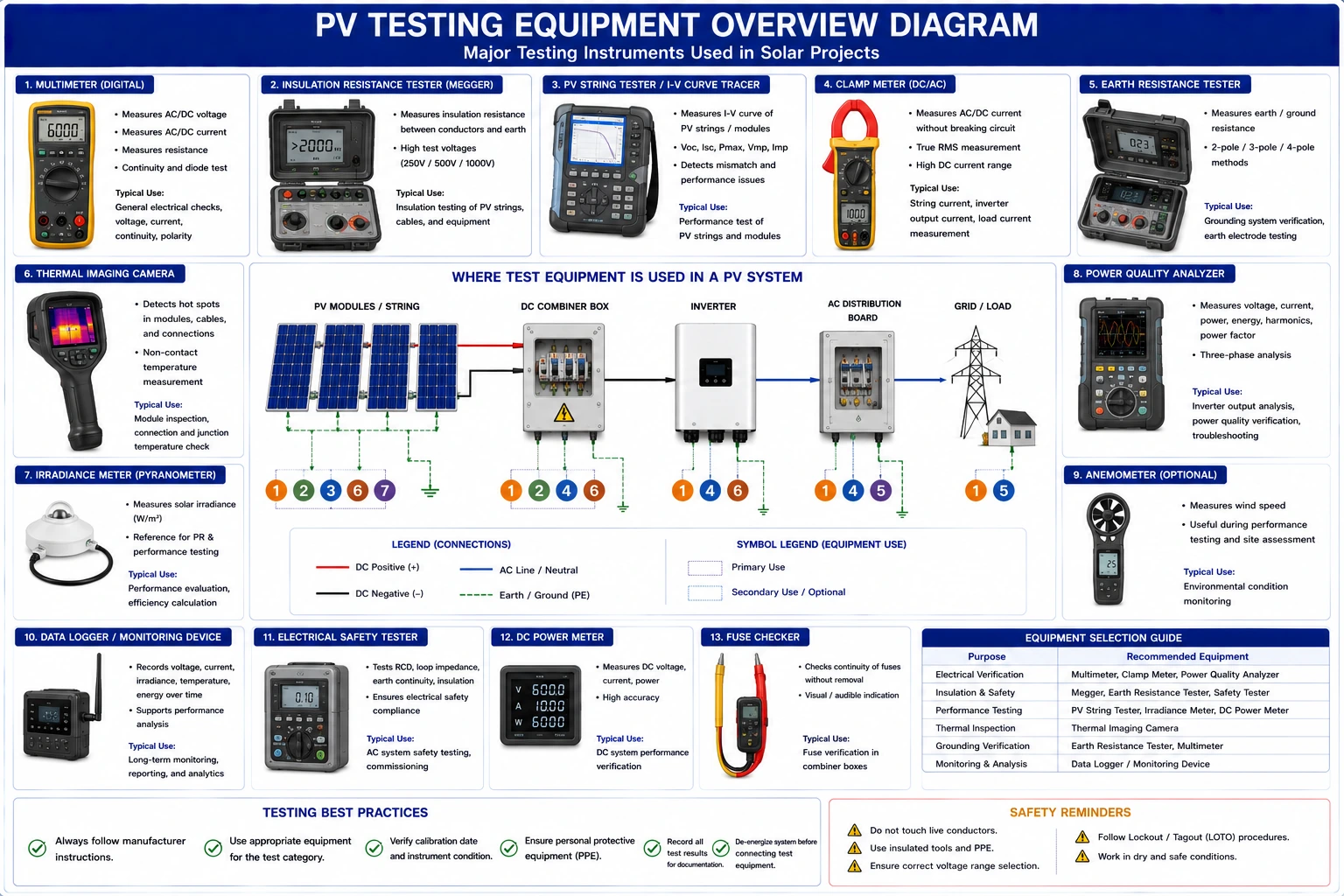
Essential Tools Required for PV System Testing
1. Digital Multimeter (DMM)
A digital multimeter is one of the most commonly used testing tools in solar installations.
Functions
- Measure voltage
- Measure current
- Measure resistance
- Verify continuity
Applications
- Solar module testing
- Cable testing
- Battery testing
- Inverter verification
Benefits
- Portable
- Versatile
- Easy to use
2. Clamp Meter
A clamp meter measures electrical current without disconnecting conductors.
Functions
- Measure AC current
- Measure DC current
- Verify load current
Applications
- String current measurements
- Inverter output testing
- Load analysis
Benefits
- Safe current measurement
- Fast testing process
3. Insulation Resistance Tester (Megger)
An insulation resistance tester evaluates cable and equipment insulation quality.
Functions
- Detect insulation degradation
- Verify cable integrity
Applications
- PV cable testing
- Combiner box inspection
- Inverter wiring verification
Importance
Poor insulation can cause:
- Energy losses
- Safety hazards
- Equipment failures
4. Earth Resistance Tester
Grounding performance is critical in renewable solar systems.
Functions
- Measure grounding resistance
- Verify the earthing system effectiveness
Applications
- Ground rod testing
- Equipment grounding verification
- Lightning protection inspection
Benefits
- Improved electrical safety
- Better fault current dissipation
5. Continuity Tester
A continuity tester verifies electrical continuity between conductors.
Applications
- Bonding verification
- Grounding continuity checks
- Cable testing
Benefits
- Quick fault detection
- Improved installation quality
6. Solar PV Analyzer
A solar PV analyzer is a specialized instrument designed specifically for photovoltaic systems.
Functions
- Measure PV performance
- Verify electrical parameters
- Analyze system efficiency
Parameters Measured
- Voltage
- Current
- Power
- Irradiance
- Temperature
Applications
- Commissioning tests
- Performance evaluations
7. I-V Curve Tracer
An I-V curve tracer evaluates solar module and string performance.
Functions
Measures:
- Current-voltage characteristics
- Power output
- Module efficiency
Benefits
- Identifies defective modules
- Detects mismatch losses
- Supports troubleshooting
8. DC Voltage Tester
DC voltage testing is essential because solar modules generate direct current.
Applications
- String voltage verification
- Open-circuit voltage testing
- Combiner box inspection
9. AC Power Analyzer
Used for testing inverter output and grid interaction.
Functions
Measures:
- AC voltage
- Current
- Frequency
- Power factor
Applications
- Inverter commissioning
- Utility interconnection verification
Solar Performance Measurement Tools
10. Solar Irradiance Meter
Measures sunlight intensity reaching solar panels.
Applications
- Performance ratio calculations
- Module testing
- Site analysis
Importance
- Accurate irradiance measurements help determine expected solar power output.
11. Pyranometer
A highly accurate solar radiation measurement device.
Applications
- Utility-scale solar projects
- Performance monitoring
- Research applications
12. Module Temperature Meter
Measures solar module surface temperature.
Benefits
- Performance analysis
- Troubleshooting efficiency losses
13. Infrared Thermal Camera
Thermal imaging is a valuable diagnostic tool.
Detects
- Hot spots
- Loose connections
- Faulty modules
- Overheating equipment
Applications
- Preventive maintenance
- Commissioning inspections
Battery Testing Equipment
For hybrid and off-grid systems, battery testing is essential.
14. Battery Analyzer
Measures:
- Battery voltage
- Capacity
- Internal resistance
Applications
- Battery health assessment
- System commissioning
15. Hydrometer (Lead-Acid Batteries)
Used to measure electrolyte specific gravity.
Benefits
- Battery condition assessment
Mechanical Inspection Tools
16. Torque Wrench
Proper tightening is critical for electrical and mechanical connections.
Applications
- Terminal tightening
- Structural inspections
- Inverter connections
17. Measuring Tape
Used for:
- Equipment spacing verification
- Layout inspection
18. Spirit Level and Laser Level
Verify:
- Equipment alignment
- Structural leveling
Accessories Required for PV System Testing
Test Leads
- High-quality insulated leads ensure accurate measurements.
MC4 Test Adapters
Special adapters designed for solar connectors.
Benefits
- Safe testing
- Faster measurements
Alligator Clips
- Used for temporary test connections.
Extension Test Cables
- Useful for testing large solar installations.
Probe Sets
- Different probe types support various testing scenarios.
Data Logging Devices
Store test results for:
- Reporting
- Performance analysis
- Documentation
Personal Protective Equipment (PPE) for Testing
Testing activities involve exposure to live electrical systems.
Required PPE includes:
- Safety helmet
- Insulated gloves
- Safety shoes
- Safety glasses
- Arc-flash protective clothing where applicable
Inspection of Testing Equipment Before Use
Before testing:
- Check Calibration Status
- Ensure instruments are calibrated
- Inspect Leads and Connectors
Look for:
- Damage
- Cracks
- Loose connections
Verify Battery Condition
- Ensure testing equipment batteries are adequately charged.
Perform Functional Checks
- Verify instrument operation before site use.
Conclusion
Having the right tools and accessories for PV system testing is essential for ensuring safe, efficient, and reliable solar installations. From digital multimeters and insulation resistance testers to irradiance meters and thermal cameras, each instrument plays a crucial role in verifying system performance and identifying potential issues before commissioning.
Systematic testing and inspection are fundamental to quality solar electricity generation and long-term renewable solar system performance. Furthermore, following recommendations issued by the Ministry of New and Renewable Energy helps ensure compliance with safety and quality requirements.
By selecting the appropriate testing equipment, maintaining calibration, following best practices, and documenting results accurately, solar installers and EPC professionals can optimize solar panel system cost, improve renewable energy technology performance, and contribute to the long-term success of residential, commercial, industrial, and utility-scale solar projects.
FAQs
Q1. What is the most important testing tool for solar PV systems?
Ans: A digital multimeter is one of the most essential tools because it can measure voltage, current, resistance, and continuity.
Q2. Why is insulation resistance testing important?
Ans: It helps identify damaged insulation that may cause electrical faults, energy losses, or safety hazards.
Q3. What does a solar irradiance meter measure?
Ans: It measures the intensity of sunlight reaching the solar modules, which helps evaluate system performance.
Q4. Why is an earth resistance tester required?
Ans: It verifies the effectiveness of the grounding system and ensures electrical safety.
Q5. Should testing equipment be calibrated regularly?
Ans: Yes. Regular calibration ensures measurement accuracy and compliance with quality standards.
Solar PV Mounting Techniques: Rooftop & Ground Systems
A complete guide to solar PV module mounting techniques for rooftop and ground systems, including methods, structures, and best practices.
COP27: Harnessing Solar Energy for a Sustainable Future
COP27 is the latest in a long line of global climate conferences, which have been held regularly since 1994. The United Nations Framework Convention on Climate Change (UNFCCC) was created at the 1992 Rio Earth Summit.
Solar System Grounding Conductor Size Guide
A complete guide to determining grounding conductor size for solar PV systems, ensuring safe, compliant, and reliable installations.
India Raises Solar Purchase Obligation (SPO) to 8%: A Complete Guide
The Solar Purchase Obligation (SPO) in India is set to increase to 8%, pushing companies to adopt more solar energy. This guide explains the implications for businesses, compliance strategies, and how organizations can align with renewable energy targets.
Battery Maintenance for Solar PV Systems Guide
A complete guide to battery maintenance for solar PV systems, including inspection, cleaning, testing, charging, and preventive maintenance to ensure long battery life and reliable performance.
Hazard Mitigation Measures for Solar PV Systems
A complete guide to mitigation measures after hazards occur in solar PV systems, covering emergency response, hazard control, incident reporting, corrective actions, and follow-up inspections.
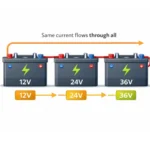
Series Connection of PV Modules – Effect on Voltage and Current
Connecting PV modules in series is a common practice in solar installations. This guide explains how series connections affect voltage and current and why they are used in solar PV systems.
How to Prepare Battery Terminals and Install Interconnection Cables
Proper battery terminal preparation and cable installation are essential for safe and efficient battery bank operation. This guide explains the complete installation process for solar projects.