
Installing a solar photovoltaic (PV) system involves electrical, mechanical, structural, and environmental risks. A PV installer works with solar modules, mounting structures, DC and AC cables, inverters, protection devices, earthing systems, and sometimes batteries. Taking preventive measures before and during installation is therefore essential for protecting workers, equipment, and the long-term performance of the system.
A well-planned installation not only improves safety but also supports reliable solar electricity generation, reduces maintenance requirements, and helps control the overall solar installation cost. This guide explains the key preventive measures that every PV installer should follow.
Why Are Preventive Measures Important for PV Installers?
Solar PV installation involves several hazards, including:
- Electric shock and electrical burns
- DC and AC voltage exposure
- Falls from height
- Manual handling injuries
- Cuts and impact injuries
- Fire hazards
- Extreme weather exposure
- Damaged cables and equipment
- Incorrect installation
- Poor grounding and earthing
Preventive measures help identify these risks before they result in accidents, equipment damage, or system failure.
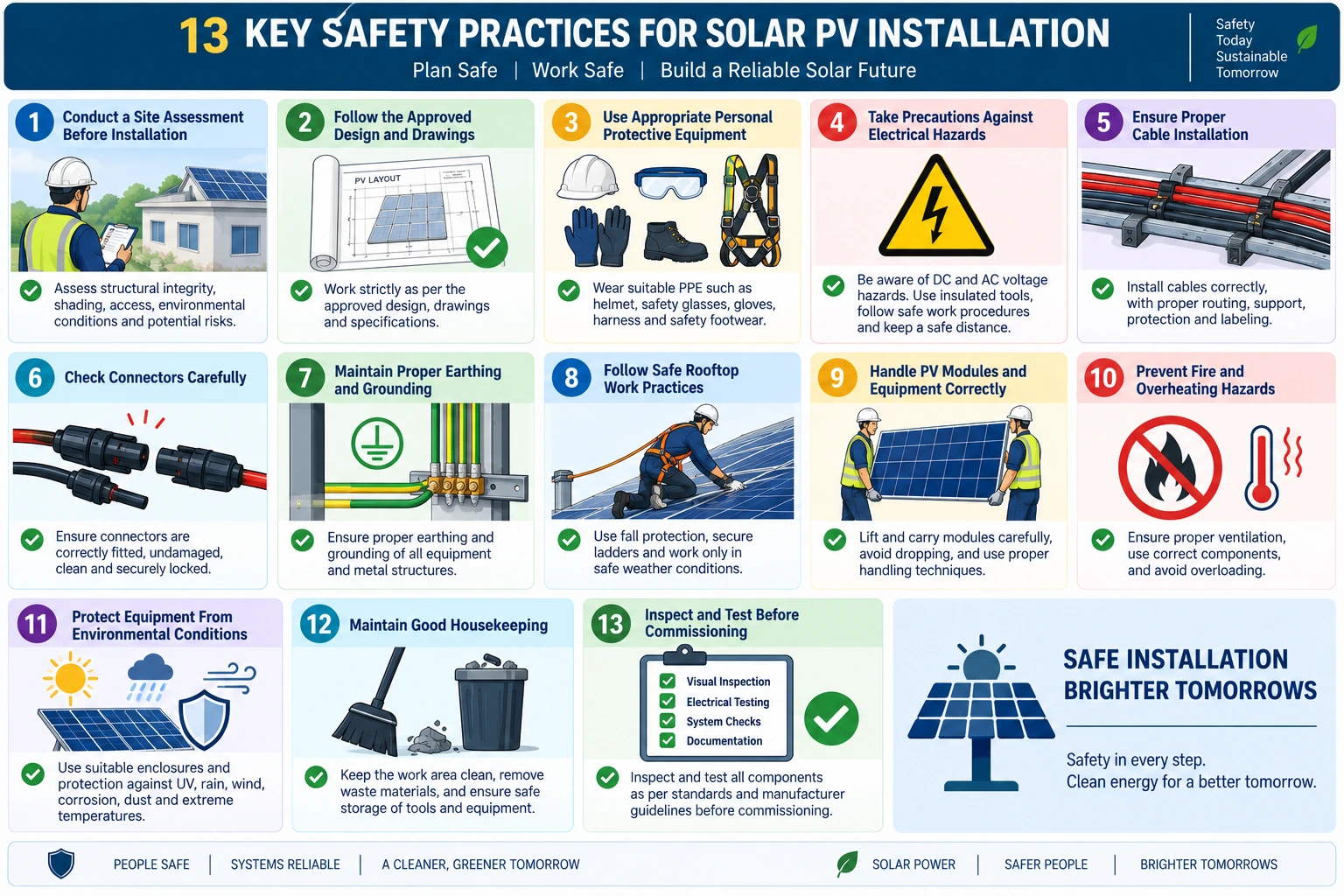
1. Conduct a Site Assessment Before Installation
A detailed site assessment should be completed before installation begins. The installer should examine:
- Roof or ground conditions
- Structural strength
- Access routes
- Shading
- Orientation and available installation area
- Existing electrical infrastructure
- Cable routing
- Earthing arrangements
- Weather and environmental conditions
For rooftop installations, the condition and load-bearing capacity of the roof should be assessed by competent personnel where required.
2. Follow the Approved Design and Drawings
PV installers should work according to approved system documentation rather than making unauthorized changes during installation.
Important documents may include:
- Layout drawings
- Single-line diagram (SLD)
- Electrical drawings
- Mounting structure drawings
- Bill of Materials (BOM)
- Equipment datasheets
- Cable schedules
- Earthing plans
Any significant change should be reviewed and approved through the appropriate process.
3. Use Appropriate Personal Protective Equipment
The installer should use PPE based on the hazards identified during the site assessment.
Common PPE includes:
- Safety helmet
- Safety shoes
- Safety glasses
- Protective gloves
- Fall-protection equipment for rooftop work
- High-visibility clothing where required
- Appropriate electrical PPE
PPE should be inspected before use and replaced if damaged.
4. Take Precautions Against Electrical Hazards
PV modules can generate DC electricity whenever they receive sufficient sunlight. Therefore, installers should treat PV conductors as potentially energized during daylight.
Preventive measures include:
- Avoid unnecessary contact with exposed conductors.
- Use appropriately rated electrical tools.
- Verify polarity before connections.
- Follow proper isolation procedures.
- Keep connectors clean and dry.
- Never bypass protective devices.
- Verify circuits before electrical work.
The DC and AC sides of the system should be treated as separate electrical hazards and handled according to the applicable procedures.
5. Ensure Proper Cable Installation
Improperly installed cables can result in electrical faults, insulation damage, and fire.
Installers should ensure that:
- Cables are correctly sized.
- Cables are properly supported.
- Sharp edges are avoided.
- Connectors are correctly matched.
- Cables are protected from mechanical damage.
- Cable bends comply with manufacturer requirements.
- DC and AC cables are appropriately routed.
- Outdoor cables are suitable for the environment.
Cable ties and clips should not damage cable insulation.
6. Check Connectors Carefully
PV connectors should be compatible and correctly installed.
Installers should check:
- Correct connector type
- Polarity
- Proper engagement
- Physical damage
- Cleanliness
- Moisture ingress
Improperly connected connectors can increase resistance and cause heating, arcing, or system failure.
7. Maintain Proper Earthing and Grounding
A properly designed and installed earthing system is essential for PV safety.
Installers should verify that:
- Required metallic components are appropriately bonded.
- Grounding conductors are correctly installed.
- Connections are secure.
- Earthing points are protected against corrosion.
- The grounding system follows the approved design and applicable requirements.
Lightning protection should also be considered where required by the project design and site conditions.
8. Follow Safe Rooftop Work Practices
Rooftop PV installation presents significant fall hazards.
Installers should:
- Use approved access routes.
- Inspect ladders and access equipment.
- Use suitable fall-protection systems where required.
- Keep work areas organized.
- Avoid working on unsafe or wet surfaces.
- Secure tools and materials.
- Stop work during unsafe weather conditions.
Extra care is necessary around fragile roofing materials, roof edges, and skylights.
9. Handle PV Modules and Equipment Correctly
Solar modules are relatively fragile and can be damaged through improper handling.
Installers should:
- Use appropriate lifting methods.
- Avoid dropping modules.
- Protect modules during transportation.
- Avoid placing excessive loads on modules.
- Follow manufacturer handling instructions.
- Inspect modules for cracks or other physical damage before installation.
Damaged modules should be identified and appropriately segregated.
10. Prevent Fire and Overheating Hazards
Fire risks can result from incorrect wiring, loose connections, overloaded circuits, damaged insulation, or poor installation practices.
Preventive measures include:
- Correct cable sizing
- Proper connector installation
- Correct protection-device selection
- Secure electrical connections
- Proper ventilation around inverters
- Regular inspection of electrical equipment
Burn marks, unusual smells, or excessive heating should never be ignored.
11. Protect Equipment From Environmental Conditions
PV equipment is exposed to outdoor conditions such as sunlight, rain, dust, humidity, and temperature variations.
Installers should ensure that:
- Equipment is suitable for its installation environment.
- Inverters have adequate ventilation.
- Enclosures remain properly sealed.
- Cable entries are protected.
- Water accumulation is prevented.
- Equipment is not unnecessarily exposed to extreme conditions.
12. Maintain Good Housekeeping
A clean and organized work area reduces accidents.
Installers should:
- Remove packaging materials promptly.
- Keep tools organized.
- Prevent cables from becoming trip hazards.
- Store components safely.
- Keep access paths clear.
- Dispose of waste appropriately.
Good housekeeping is especially important on rooftops and electrical work areas.
13. Inspect and Test Before Commissioning
Before the PV system is energized, the installer should verify the installation.
Checks may include:
- Module condition
- Cable routing
- Connector installation
- Polarity
- Continuity
- Insulation resistance where applicable
- Earthing
- DC voltage
- AC connections
- Protection devices
- Inverter connections
- System labeling
Testing should be performed using appropriate instruments and according to the applicable procedure.
Preventive Measures Checklist for PV Installers
Before completing an installation, verify:
- Site assessment completed
- Approved drawings available
- PPE used
- Safe access provided
- Electrical hazards controlled
- Cables correctly installed
- Connectors properly secured
- Earthing completed
- Modules inspected
- Inverter installed correctly
- Protection devices checked
- Labels installed
- Testing completed
- Documentation prepared
Conclusion
Preventive measures are fundamental to safe and reliable PV installation. A PV installer must consider electrical, structural, environmental, mechanical, and occupational hazards throughout the installation process. Proper planning, PPE, safe rooftop practices, correct cable and connector installation, effective grounding, equipment protection, and thorough testing can significantly reduce the risk of accidents and system failures.
These practices also contribute to dependable solar electricity generation and help protect the long-term investment in a solar plant. Whether the system is designed for solar energy for home use, commercial applications, or larger projects, a disciplined installation process improves safety, reliability, and performance.
Ultimately, good PV installation is not only about placing solar modules and connecting equipment. It is about creating a complete system that is safe, properly tested, maintainable, and capable of delivering reliable renewable energy and solar energy throughout its service life.
FAQs
Q1. What are the most important preventive measures for a PV installer?
Ans: The most important measures include site assessment, proper PPE, electrical isolation, safe rooftop practices, correct cable installation, proper earthing, equipment inspection, and testing before commissioning.
Q2. Why is site assessment important for solar installation?
Ans: It identifies structural, electrical, environmental, shading, access, and safety considerations before installation begins.
Q3. What PPE should a PV installer use?
Ans: Depending on the work, PPE may include a helmet, safety shoes, gloves, safety glasses, fall-protection equipment, and suitable electrical PPE.
Q4. Why should PV cables be handled carefully?
Ans: Improper routing or damaged insulation can lead to short circuits, electrical faults, overheating, and fire.
Q5. Why is earthing important in a PV system?
Ans: Proper earthing helps manage electrical fault conditions and improves personnel and equipment safety.
Solar Rooftop Subsidy: Why It’s Time for a Change of Mindset
While solar rooftop subsidies help reduce upfront costs, true adoption requires a mindset shift. This guide discusses why businesses and homeowners should focus on long-term benefits, sustainability, and strategic planning beyond relying solely on incentives.
Inspection Reporting and Corrective Actions
A complete guide to preparing solar PV inspection reports and implementing corrective actions to ensure quality, compliance, and project performance.

Agrovoltaics Innovation: Boosting Solar Energy While Supporting Farming
Explore agrovoltaics innovation: how combining solar energy with farming boosts efficiency, supports agriculture, and maximizes land use.

Eco-Friendly Solar Panels: The Future of Sustainable Power
Eco-friendly solar panels are revolutionizing the way we generate clean energy. This blog explores their benefits, sustainable materials, and role in reducing carbon footprint while providing efficient energy solutions for residential, industrial, and commercial use. Learn why investing in eco-friendly solar technology is the future of sustainable power.

Solar for Food Processing Units: Cost, Benefits, Installation & ROI in India
A complete guide on solar systems for the FMCG industry in India covering installation cost, benefits, ROI, system sizing, and the installation process.
Solar Structure Alignment and Leveling Guide for Installers
A step-by-step guide to solar tracking system installation, covering setup, alignment, and best practices for maximum efficiency and performance.
Solar Radiation on a Tilted Surface: Importance & Impact on Solar Output
Solar radiation on a tilted surface directly affects how much energy a solar panel produces. Learn why tilt angle matters and how it impacts solar output.

Difference Between Electric Power and Energy: Why Is It Important for Solar Installers?
Electric power and electrical energy are fundamental concepts in solar installations. This guide explains their differences, formulas, units, and importance for solar PV system performance.