
As India continues to shift toward renewable energy and solar energy, one term that appears everywhere is “photovoltaic power output.” Whether you are planning solar installation for home use, setting up a commercial plant, or comparing solar panel system cost, understanding photovoltaic output helps you choose the right system.
In this blog, we break down what PV power output means, how it is calculated, what factors affect it, and why it directly impacts your savings, ROI, and the total cost of solar installation in places like Haryana, UP, MP, Rajasthan, and across India.
What Is Photovoltaic Power Output?
Photovoltaic (PV) power output simply means the amount of electricity generated by a solar panel when sunlight falls on it. PV modules convert sunlight into solar electricity using semiconductor materials like silicon. This output is usually measured in watts (W) or kilowatts (kW).
The stronger the sunlight, the higher the photovoltaic output. This is why areas with better solar exposure offer higher returns and lower solar installation cost per kWh.
PV output helps users understand:
- How much energy the solar panels can produce daily or monthly
- Whether the system can power all home or industrial loads
- How much savings they can expect on electricity bills
- What should be the ideal system size based on solar panel area per kW
Understanding this value is important before you calculate solar energy installation cost or compare solar module price per watt.
How Is Photovoltaic Power Output Calculated?
The PV output depends on a combination of technical and environmental factors. Here’s the simplified formula:
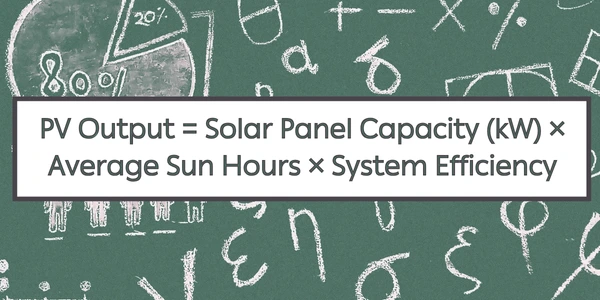
For example, a 1 kW system with 4.5 hours of good sunlight can produce around 4 to 4.5 units per day.
Why this matters:
- Helps calculate the yearly output
- Helps estimate the home roof solar panels cost and payback
- Allows businesses to plan large systems based on cost of solar per kWh installed
The better the sunlight and panel quality, the more energy generated, making renewable solar one of the most economical energy sources today.
Factors That Affect Photovoltaic Power Output
1. Quality of Solar Panels
Higher-quality panels generate more energy. Monocrystalline panels, for example, offer higher efficiency but come at a higher smart solar panel price.
2. Irradiation Levels
States with strong sunlight, like Rajasthan and Haryana, produce more solar electricity daily.
3. Panel Orientation & Tilt
Panels must be tilted correctly to get maximum exposure.
4. Temperature
Very high temperatures can reduce output slightly, which is why installation quality matters.
5. Inverter Quality
The PV output also depends on how efficiently the inverter converts DC to AC.
Understanding these factors helps in calculating whether your solar roof installation cost is optimized for maximum energy generation.
Why PV Output Matters for Homes
For homeowners planning to reduce monthly electricity bills, PV output is the main deciding point. A higher output means:
- Lower dependency on grid electricity
- Higher monthly savings
- Faster payback of the average cost of solar panels on a house
- Maximum benefit from subsidised solar panels for the home under the government solar subsidy scheme
With increasing electricity tariffs, the right PV output can help households become energy independent while making solar energy economical.
Why PV Output Matters for Commercial & Industrial Use
Commercial units rely heavily on machinery, lighting, and HVAC systems. Higher PV output directly translates into:
- Huge electricity bill reduction
- Stronger savings on demand charges
- Lower operational cost per unit
- Better ROI on solar panel system cost
Industries in Haryana, Rajasthan, UP, and MP especially benefit because they receive high solar irradiation, giving better generation per kW.
How Does PV Output Influence Solar Installation Cost?
Solar installation cost depends on:
- Required energy output
- Panel type
- Inverter capacity
- Rooftop or ground setup
- Local sunlight conditions
If you want a certain energy output, the system size is calculated backwards. This is used to estimate:
- Solar module price per watt
- Solar installation cost per kWh
- Total cost of solar installation, including BOS materials
When PV output is high, the payback becomes faster, and the solar energy installation cost becomes more justified.
PV Output and Land / Roof Requirements
PV output also helps determine how much space you need:
- 1 kW requires 80-100 sq. ft. (varies by panel efficiency).
- Higher efficiency = Less space needed.
This calculation is important for both solar panel in rooftop installations and open land projects.
How to Maximise Photovoltaic Power Output
To get the best performance from your solar plant:
- Choose high-efficiency panels
- Check the solar panel area per kW before sizing the plant
- Ensure proper tilt and shadow-free installation
- Select a high-quality inverter
- Opt for reliable installation teams
- Clean the panels regularly
These steps ensure your plant produces maximum solar electricity for many years.
Conclusion: PV Output = Better Savings + Better ROI
Photovoltaic power output is the most important factor in determining how much energy your solar system can generate and how quickly you recover your investment. Whether you’re installing solar for home or industrial use, a higher PV output ensures:
- Lower electricity bills
- Higher monthly savings
- Maximum benefit from subsidies
- Long-term reliable power generation
If you’re planning to install a solar system and want to understand your ideal PV output, Smart Roof Solar can help you calculate the right size, space, and cost based on your load requirements.
FAQs
Q1. Does PV power output remain the same throughout the day?
Ans: No, it fluctuates based on sunlight intensity, temperature, and shading.
Q2. Do batteries increase PV power output?
Ans: No, batteries only store excess energy; they don’t increase the generation itself.
Q3. How long do solar panels maintain their rated output?
Ans: Most panels retain 80-90% of their original output even after 25 years.
Q4. What is the degradation rate in photovoltaic systems?
Ans: It’s the yearly reduction in panel efficiency, typically 0.5-0.7% for good-quality modules.
Q5. Can I increase PV output without adding more panels?
Ans: Optimizers, microinverters, and better tilt/orientation can boost usable output.
500 kW Solar Power Plant Cost in UP 2025 | Latest Price, Subsidy & ROI
Thinking of setting up a 500 kW solar power plant in Uttar Pradesh? Discover the 2025 cost estimate, available subsidies, and expected ROI. Learn how commercial and industrial projects in UP can reduce energy expenses and achieve long-term savings with solar energy.

New Loan Scheme for solar rooftop projects by IREDA
Solar installation for petrol pumps offers huge savings and energy independence. This 2025 guide explains system cost, subsidy, ROI, and installation process.

PM Surya Ghar Muft Bijli Yojana 2025: Online Registration Made Simple
PM Surya Ghar Muft Bijli Yojana 2025: Learn how to register online and get free electricity under this government scheme.
100 kW Solar Plant Cost in Rajasthan: Latest Cost, Maintenance & Payback Time
Installing a 100 kW solar plant in Rajasthan costs around ₹40–60 lakh in, with annual savings up to ₹10–12 lakh. Discover maintenance needs, ROI, and payback period of 4–6 years.
COP27: Harnessing Solar Energy for a Sustainable Future
COP27 is the latest in a long line of global climate conferences, which have been held regularly since 1994. The United Nations Framework Convention on Climate Change (UNFCCC) was created at the 1992 Rio Earth Summit.

Solar Projects Challenges in India: Module Supply Shortages and Policy Delays Slow Growth
India’s utility-scale solar projects face delays due to module supply shortages and policy challenges, impacting the growth of renewable energy.
Solar PV AC or DC: How Solar Electricity Is Generated
Total solar PV power represents the combined power output of a solar photovoltaic system. This guide explains its meaning, calculation, and how it directly impacts solar performance, efficiency, and long-term energy generation.
How Total Solar PV Power Affects Solar System Efficiency
Total solar PV power represents the combined power output of a solar photovoltaic system. This guide explains its meaning, calculation, and how it directly impacts solar performance, efficiency, and long-term energy generation.