
In the renewable energy sector, especially in solar PV installation, accuracy and safety are non-negotiable. A solar power system must be tested, verified, and maintained with precision to ensure optimal performance. This is where measuring instruments like a voltmeter, an ammeter, a digital multimeter (DMM), and a clamp meter become essential tools for every solar installer.
From checking solar panel voltage to measuring inverter output current, these instruments help diagnose issues, prevent faults, and maintain system efficiency. This guide provides a complete explanation of these measuring instruments and their importance in solar installation.
Why Measuring Instruments Are Important in Solar Installation
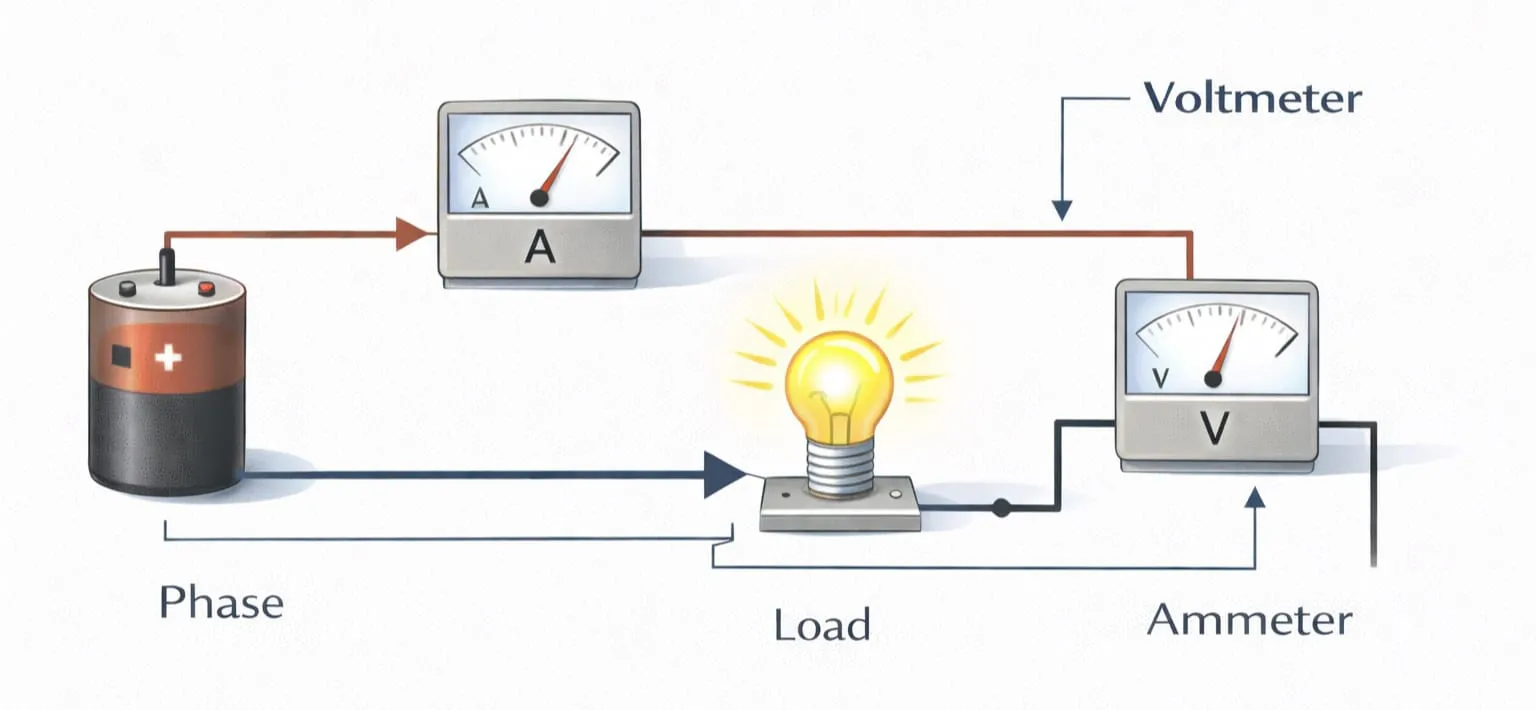
Solar PV systems operate using electrical principles involving voltage, current, resistance, and power. Improper measurements can lead to:
- Inverter damage
- Cable overheating
- Energy losses
- Safety hazards
- Reduced system efficiency
Professional solar installers rely on accurate electrical measuring instruments to ensure safe and efficient system performance.
1. Voltmeter – Full Explanation
What Is a Voltmeter?
A voltmeter is an instrument used to measure electrical voltage (potential difference) between two points in a circuit. It is measured in volts (V).
Types of Voltage Measured in Solar Systems:
- DC voltage (from solar panels and batteries)
- AC voltage (from inverter output)
How a Voltmeter Is Connected
A voltmeter is always connected in parallel across the component whose voltage is being measured.
Importance of Voltmeter for Solar Installers
- Checking open circuit voltage (Voc) of solar panels
- Verifying the string voltage before the inverter connection
- Testing battery voltage
- Ensuring the inverter AC output is within range
- Detecting voltage drops
Without voltage measurement, proper system commissioning is impossible.
2. Ammeter – Full Explanation
What Is an Ammeter?
An ammeter measures the flow of electric current in a circuit. Current is measured in amperes (A).
How an Ammeter Is Connected
An ammeter is connected in series with the circuit to measure current flow.
Importance of an Ammeter in Solar Systems
- Checking short circuit current (Isc) of solar panels
- Measuring charging current in batteries
- Testing inverter output current
- Detecting overload conditions
- Identifying imbalance in three-phase systems
Accurate current measurement ensures cable sizing and load safety.
3. Digital Multimeter (DMM) – Full Explanation
What Is a Digital Multimeter?
A Digital Multimeter (DMM) is a versatile instrument that combines:
- Voltmeter
- Ammeter
- Ohmmeter (measures resistance)
Modern DMMs also measure:
- Continuity
- Frequency
- Capacitance
- Diode testing
Why the Digital Multimeter Is Essential for Solar Installers
A DMM is one of the most important tools for solar PV technicians.
Uses in Solar Installation:
- Measuring DC panel voltage
- Checking the AC inverter output
- Testing cable continuity
- Measuring resistance in grounding systems
- Troubleshooting faulty connections
- Verifying fuse condition
It is compact, reliable, and essential for daily site testing.
4. Clamp Meter – Full Explanation
What Is a Clamp Meter?
A clamp meter measures current without physically disconnecting the circuit. It detects magnetic fields around conductors to measure current flow.
Key Advantage
Unlike traditional ammeters, a clamp meter does not need to be inserted in series. It simply clamps around a live wire.
Importance of Clamp Meter for Solar Installers
- Measuring current in live circuits
- Checking inverter AC output current
- Measuring load current without shutting down the system
- Diagnosing imbalance in three-phase systems
- Ensuring safe and quick testing
- Clamp meters improve safety and efficiency during maintenance.
Comparison of Measuring Instruments
|
Instrument |
Measures |
Connection Type |
Solar Application |
|
Voltmeter |
Voltage (V) |
Parallel |
Check panel & inverter voltage |
|
Ammeter |
Current (A) |
Series |
Measure panel & load current |
|
Digital Multimeter |
Voltage, Current, Resistance |
Series/Parallel |
General troubleshooting |
|
Clamp Meter |
Current (A) |
No direct connection |
Live current testing |
Why These Instruments Are Mandatory for Solar Installers
Every professional solar installer must use measuring instruments for:
1. System Commissioning
Ensuring correct voltage and current before grid connection.
2. Safety Testing
Preventing overload and short circuit conditions.
3. Performance Verification
Checking if the system produces the expected power output.
4. Fault Detection
Identifying loose connections or damaged components.
5. Compliance and Inspection
Meeting electrical standards and regulatory requirements.
Common Measurements in Solar Installation
- Open Circuit Voltage (Voc)
- Short Circuit Current (Isc)
- Operating Voltage (Vmp)
- Operating Current (Imp)
- Battery Charging Voltage
- AC Output Voltage (230V / 415V)
- Grounding Resistance
Proper testing ensures long-term system reliability.
Safety Precautions While Using Measuring Instruments
- Use insulated probes
- Wear safety gloves
- Check instrument rating (CAT III or CAT IV preferred)
- Ensure proper range selection
- Avoid measuring beyond rated limits
Electrical safety is critical in solar PV systems.
Conclusion
Measuring instruments such as the voltmeter, ammeter, digital multimeter, and clamp meter are indispensable tools for every solar installer. They ensure accurate voltage and current measurement, system safety, efficient troubleshooting, and compliance with electrical standards.
In solar PV installations, even small measurement errors can lead to significant performance losses or safety hazards. A professional installer must be skilled in using these instruments to verify panel output, inverter functionality, load balance, and system integrity.
As renewable energy adoption continues to grow, technical accuracy and electrical testing expertise will remain central to successful solar installations. Investing in the right measuring instruments is not just a technical requirement, it is a professional responsibility.
FAQs
Q1. Why is a voltmeter important in solar installation?
Ans: It helps measure panel and inverter voltage accurately.
Q2. Can a digital multimeter replace a voltmeter and an ammeter?
Ans: Yes, most DMMs combine both functions.
Q3. Why is a clamp meter safer?
Ans: It measures current without disconnecting wires.
Q4. What is Voc in solar systems?
Ans: Open circuit voltage of a solar panel.
Q5. What is Isc in solar panels?
Ans: Short circuit current of a panel.
Why Is Investing In Grade A Panels Important?
Investing in Grade A solar panels guarantees superior performance, safety, and maximum return on your solar investment.
Earthing & Lightning Protection Testing for Solar PV Systems
A complete guide to earthing and lightning protection testing for solar PV systems, ensuring safety, regulatory compliance, and long-term system reliability.
Net Metering and its Advantages
Net Metering allows solar panel owners to feed excess electricity back to the grid and earn credits, reducing energy bills. Learn the key advantages of net metering for homes and businesses.
Solar Inverters India: How to Choose the Best for Your Solar System
India’s solar market offers a wide range of inverters, making selection challenging. This guide explains key factors to consider, helping users choose the right inverter for residential, commercial, and industrial solar projects effectively.

Photovoltaic Power Output Explained: A Practical Guide for Homes & Businesses
Photovoltaic power output determines how much electricity a solar system can generate. This simple guide explains PV output, how it is calculated, and what it means for homes and businesses planning to go solar.
Difference Between Single-Phase and Three-Phase Voltage and Its Use for Solar PV Installer – Complete Guide
Understanding the difference between single-phase and three-phase voltage is essential for solar PV installers. While single-phase supply is common in residential systems, three-phase power is widely used in commercial and industrial solar projects. This complete guide explains electrical phase differences, applications in solar installations, and how choosing the right phase connection impacts system efficiency, safety, and performance.
Safety Hazard Identification & Mitigation in Solar PV
A complete guide to identifying and mitigating safety hazards in solar PV systems, including risk assessment, hazard control, preventive measures, and workplace safety practices.

Tools to Perform Shading Analysis Prior to Solar Installation
A solar site assessment helps installers evaluate location, shading, structure, and energy requirements before installation. This guide explains the essential steps for accurate solar system planning.