
India’s renewable energy sector has expanded rapidly over the past decade, and solar power has emerged as one of the most dominant contributors to this transformation. With rising electricity costs, government clean-energy targets, and growing awareness about sustainability, the need for skilled manpower has increased significantly. Among the most in-demand roles in this ecosystem is the Solar PV Installer, the professional responsible for physically setting up and activating solar power systems.
The market demand of solar PV installers in India is growing across residential, commercial, and industrial segments. From rooftop solar projects in urban cities to large-scale solar farms in rural regions, trained installers are becoming essential to meet project timelines and quality standards.
Why the Market Demand of Solar PV Installers Is Increasing
1. Rapid Expansion of Solar Projects
India is witnessing continuous growth in rooftop solar installations, industrial solar plants, and utility-scale projects. Every new installation directly increases the requirement for skilled installers who can execute the work efficiently.
2. Rising Commercial & Industrial Solar Adoption
Factories, warehouses, malls, and corporate offices are investing heavily in commercial solar power systems to reduce electricity expenses. Large-capacity systems require multiple installation teams, further boosting employment demand.
3. Government Renewable Energy Targets
National and state-level policies promoting clean energy adoption indirectly create workforce demand. As more projects receive approvals, the number of installers needed rises proportionally.
4. Increasing Awareness of Solar ROI
Businesses and homeowners now understand the long-term financial benefits of solar energy, leading to higher installation volumes and consistent job creation.
5. Growth of Solar EPC Companies
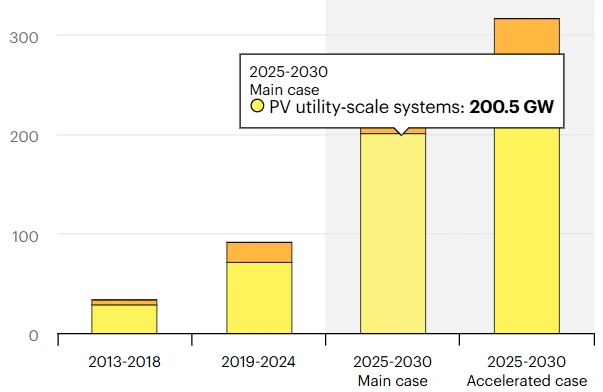
The expansion of solar EPC firms across India has created structured employment opportunities for trained solar technicians and installers.
Source: IEA
Areas Where Solar PV Installers Are Needed
The demand is not limited to one sector. Installers are required in multiple segments:
- Residential rooftop solar projects
- Commercial office buildings and malls
- Industrial factories and warehouses
- Ground-mounted solar farms
- Solar microgrids and rural electrification projects
- Maintenance and after-sales service roles
This multi-sector requirement ensures stable career prospects for solar professionals.
Skills Driving Employability in the Solar Installation Market
The rising market demand of solar also brings a need for skilled and certified professionals. Installers who possess the following skills generally experience better job opportunities:
- Basic electrical and wiring knowledge
- Understanding of solar panel mounting techniques
- Ability to read installation diagrams
- Safety and compliance awareness
- Troubleshooting and maintenance skills
- Physical endurance for rooftop and outdoor tasks
- Communication and teamwork abilities
Training and certification programs significantly enhance employability and salary potential.
Career Growth and Income Opportunities
The solar installation sector offers progressive career paths. A beginner installer can gradually move toward:
- Senior Solar Technician
- Site Supervisor or Team Leader
- Project Coordinator
- Quality Inspector
- Solar Service Entrepreneur
With experience, professionals can start independent solar installation businesses or join large EPC firms managing industrial-scale projects.
Regional Demand Patterns in India
Solar installation demand is distributed across metropolitan cities and emerging industrial zones. Urban areas show strong rooftop solar demand, while rural and semi-urban regions contribute to large ground-mounted projects and microgrid development. Industrial states with manufacturing clusters also generate high installer employment due to continuous factory solar adoption.
Future Scope of Solar PV Installers in India
The future outlook remains strong due to several ongoing trends:
- Declining solar panel prices
- Increasing electricity tariffs
- Expansion of hybrid and battery-based systems
- Growing sustainability regulations for industries
- Technological advancements in solar monitoring and automation
As renewable energy becomes a mainstream power source, the long-term job security for solar PV installers is expected to remain stable and promising.
Conclusion
The market demand of Solar PV Installers in India is on a steady and sustainable growth trajectory. As the country accelerates its clean energy transition under initiatives led by the Ministry of New and Renewable Energy and aligns with national targets set by the Government of India, the need for skilled installation professionals continues to rise across residential, commercial, and industrial sectors.
With increasing solar adoption, expanding EPC operations, and supportive policy frameworks, Solar PV installation is no longer a niche trade but a mainstream technical career with long-term stability. For individuals seeking a future-ready profession that combines technical skills, sustainability impact, and entrepreneurial potential, becoming a Solar PV Installer offers both immediate employment opportunities and strong career advancement prospects.
As India moves toward a greener energy ecosystem, skilled solar professionals will remain at the core of this transformation, making this career path not just relevant today but essential for the future.
FAQs
Q1. Is solar PV installation a growing career in India?
Ans: Yes, the renewable energy sector is expanding steadily, increasing job opportunities.
Q2. What qualifications are needed to become a solar installer?
Ans: Basic electrical knowledge and solar certification courses are beneficial.
Q3. Are solar installer jobs available in rural areas?
Ans: Yes, especially for solar farms and microgrid projects.
Q4. Do solar installers earn good salaries?
Ans: Income grows with experience, certification, and project scale.
Q5. Is certification mandatory?
Ans: Not always, but it significantly improves employability.

New Loan Scheme for solar rooftop projects by IREDA
Solar installation for petrol pumps offers huge savings and energy independence. This 2025 guide explains system cost, subsidy, ROI, and installation process.

Solar for Cold Storage Units: Cost, Benefits, Installation & ROI in India
A complete guide on solar systems for the FMCG industry in India covering installation cost, benefits, ROI, system sizing, and the installation process.

Solar for Metal & Fabrication Units: Cost, Benefits and Installation in India
A practical guide on solar for metal and fabrication units in India covering installation cost, benefits, system options, and the installation process.

PPA Model Solar for Manufacturing Units: A Complete Guide
The PPA model allows factories to use solar power without any capital investment. Under a Power Purchase Agreement, industries buy clean electricity at a fixed, lower tariff while the solar developer owns, operates, and maintains the plant—making solar adoption simple, risk-free, and cost-effective.
What Is Renewable Energy? What Is the Best Source of Renewable Energy and Why? – Complete Guide
Renewable energy comes from natural sources like sunlight, wind, water, and biomass that are constantly replenished. As India accelerates its transition toward clean energy, understanding different renewable energy sources and identifying the most efficient and cost-effective option is crucial. This complete guide explains renewable energy types, their advantages, and compares them to determine the best source based on sustainability, scalability, and long-term benefits.
How Azimuth Angle Impacts Solar Panel Efficiency for Homes, Industries, and Commercial Buildings
Discover how solar panel azimuth impacts energy generation in homes, industries, and commercial buildings. Maximize efficiency with correct orientation.

AVANCIS Pushes CIGS Thin-Film Solar Modules Beyond 20% Efficiency
AVANCIS achieves a breakthrough in solar technology, pushing CIGS thin-film modules beyond 20% efficiency for higher performance and energy output.
Fire Hazard in a Solar Setup at Rice Mill, Kaithal – Case Study and Safety Insights
A recent fire incident at a rice mill in Kaithal highlights the critical importance of safety in solar installations. This case study analyzes the root causes, system faults, and preventive actions that can help industries avoid similar hazards in their solar setups.