

How Installers Cut Costs on Solar PV Module Mounting Structures
When we are talking about 25 years of life for a Solar PV Rooftop Power Plant, Module Mounting Structure plays a crucial role. In this bog we will be discussing on Solar PV Module Mounting Structure Quality and Design.
As per standards, Solar PV Module mounting structure for a Solar PV Rooftop Power Plant should be designed to withstand storm condition with wind speed up to maximum 150 Kmph. But in the competitive market of Solar PV Rooftop Power plants, many installers are compromising with the quality and strength of Module mounting structures.
STAAD PRO TEST
To ensure that the structure is designed with relevant max wind speed the STAAD PRO test (simulating the conditions of wind speed to see the stress on each joint) needs to be done. It costs the installer about 5000 but to save these 5000, he takes risk with the life of the structure. For a 10 KW power plant this is significant as it amounts to Rs 0.5/w of savings for the installer.
Many installers use pregalvanized sheets and forming sections out of it rather than making sections with MS Plates and then going for hot dipped galvanizing (80 microns coating) the same to make the structure. But the process being adopted with pregalvanized sheets gives a better look and feel to the structure, saves cost and time.
Galvanized Sheets
When somebody cuts the galvanized sheets the cut edge of the sheet does not remain galvanized and therefore when exposed to moisture and atmospheric conditions gets rusted with time reducing the strength of the structure. The difference in cost may be around Rs. 1-2/Watt, but this saving comes with the risk of damaging the power plant.
So if the Solar PV Rooftop uses best Solar PV Module and best Inverter, but margins are created out of Structure compromising quality, then there is a possibility of Solar PV Module blowing off or structure uplifting and may more in the event of a storm or with time.
Quality and Strength of Solar PV Module Mounting Structure
So, while comparing various installers for Solar PV Rooftop System installations at your premises, you should consider the importance of module mounting structure. You need to question your installer about the size, quality and strength of the material he would be using for your Solar PV Rooftop power plant. For best results, Solar PV Module mounting structure should be a Hot Dipped Galvanized structure, designed to withstand a wind speed of maximum 150 Kmph and STAAD PRO analysis should be done for that structure.
So, when you are looking for quality installation of Solar PV Rooftop power plant that will work for 25 years and more, then you surely need to consider the importance of Structure Quality and the knowledge of the installing company. Do not go for price alone, as looking for cheaper supplier may result in costly repairs at a later stage.
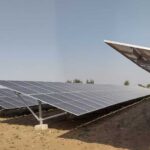
Solar PV Module Mounting Structure:
While designing the structure the tilt angle of the panels is an important aspect which needs to be carefully considered because if the direction of the panels on mounted structure is not on true south at an elevation equal to latitude of the site then there is bound to be loss of power.
Assuming altitude to be 30 degrees then 180 degree south will give the best results.
Modules after mounting on structure are facing west then loss shall be 17% but if it is facing east then loss could be as high as 22%. For optimum results of power generation structure design should be such that after mounting of modules, modules remain in true south at appropriate altitude angle.
Register at our website for reading more of such blogs.
Suggested Articles

500 kW Solar Power Plant Cost in UP 2025 | Latest Price, Subsidy & ROI
Thinking of setting up a 500 kW solar power plant in Uttar Pradesh? Discover the 2025 cost estimate, available subsidies, and expected ROI. Learn how commercial and industrial projects in UP can reduce energy expenses and achieve long-term savings with solar energy.
Important Factors Deciding the Type of Solar PV System to be Installed
A solar site assessment helps installers evaluate location, shading, structure, and energy requirements before installation. This guide explains the essential steps for accurate solar system planning.
Rajasthan Rooftop Solar Subsidy: What Homeowners Need to Know
Rajasthan homeowners can save big with the 2025 rooftop solar subsidy. Learn about the updated rates, eligibility criteria, and benefits to make your switch to solar more affordable.

Solar Energy for Industries Explained: Everything You Need to Know
Solar energy can greatly benefit industrial and factory owners as they require a constant and substantial source of electricity 24/7.
Solar Inverters India: How to Choose the Best for Your Solar System
India’s solar market offers a wide range of inverters, making selection challenging. This guide explains key factors to consider, helping users choose the right inverter for residential, commercial, and industrial solar projects effectively.

Sir! Solar Mein Itna Chalta Hai!” When to Reject a Site: The Truth About Shadow Analysis
Discover the importance of solar site assessment and shadow analysis to optimize rooftop solar performance, prevent shading losses, and maximize energy generation.
Solar Industry Faces Growing Losses from Underperforming Equipment
According to the Raptor Maps’ Global Solar Report, the amount of power loss due to equipment anomalies has nearly doubled from 1.61% in 2019 to 3.13% in 2022. This trend is expected to continue, with anomaly-driven power loss potentially growing to almost 6% by 2025.
How to Calculate Battery Capacity for Solar Off-Grid Applications
Sizing a solar battery correctly is vital for off-grid performance and energy independence. This guide explains how to calculate battery capacity, choose the right type, and design a balanced off-grid system for uninterrupted power supply.