
In solar photovoltaic (PV) systems, grounding is one of the most important safety requirements for protecting personnel, equipment, and property. Solar modules, mounting structures, and inverters are continuously exposed to environmental conditions such as rain, wind, dust, humidity, and lightning. Without a properly installed grounding system, electrical faults or surge currents can cause equipment damage, safety hazards, system downtime, and increased solar installation charges.
A well-designed grounding system provides a low-resistance path for fault currents and helps maintain the safe operation of solar PV systems. It also improves system reliability, supports lightning protection, and ensures compliance with electrical safety regulations.
Proper grounding and bonding practices are essential components of renewable solar projects and solar energy for home use.
This blog provides a complete guide to installing the grounding system for solar modules, mounting structures, and inverters, including design considerations, installation procedures, testing methods, safety precautions, and best practices.
What is Grounding in a Solar PV System?
Grounding, also known as earthing, is the process of connecting exposed metallic parts of a solar PV system to the earth through a low-resistance conductor.
Grounding helps:
- Protect personnel from electric shock
- Safely dissipate fault currents
- Reduce equipment damage
- Improve lightning protection
- Stabilize system voltage
Grounding is a mandatory requirement in renewable energy technology installations.
Why Grounding is Important in Solar Installations
Solar systems operate at high DC and AC voltages. Faults can occur due to:
- Insulation failure
- Damaged cables
- Water ingress
- Lightning strikes
- Equipment malfunction
A proper grounding system helps:
- Improve electrical safety
- Protect solar equipment
- Reduce fire risks
- Increase system reliability
- Optimize solar panel system cost
Without proper grounding, maintenance expenses and solar installation cost per kWh can increase significantly.
Components That Require Grounding
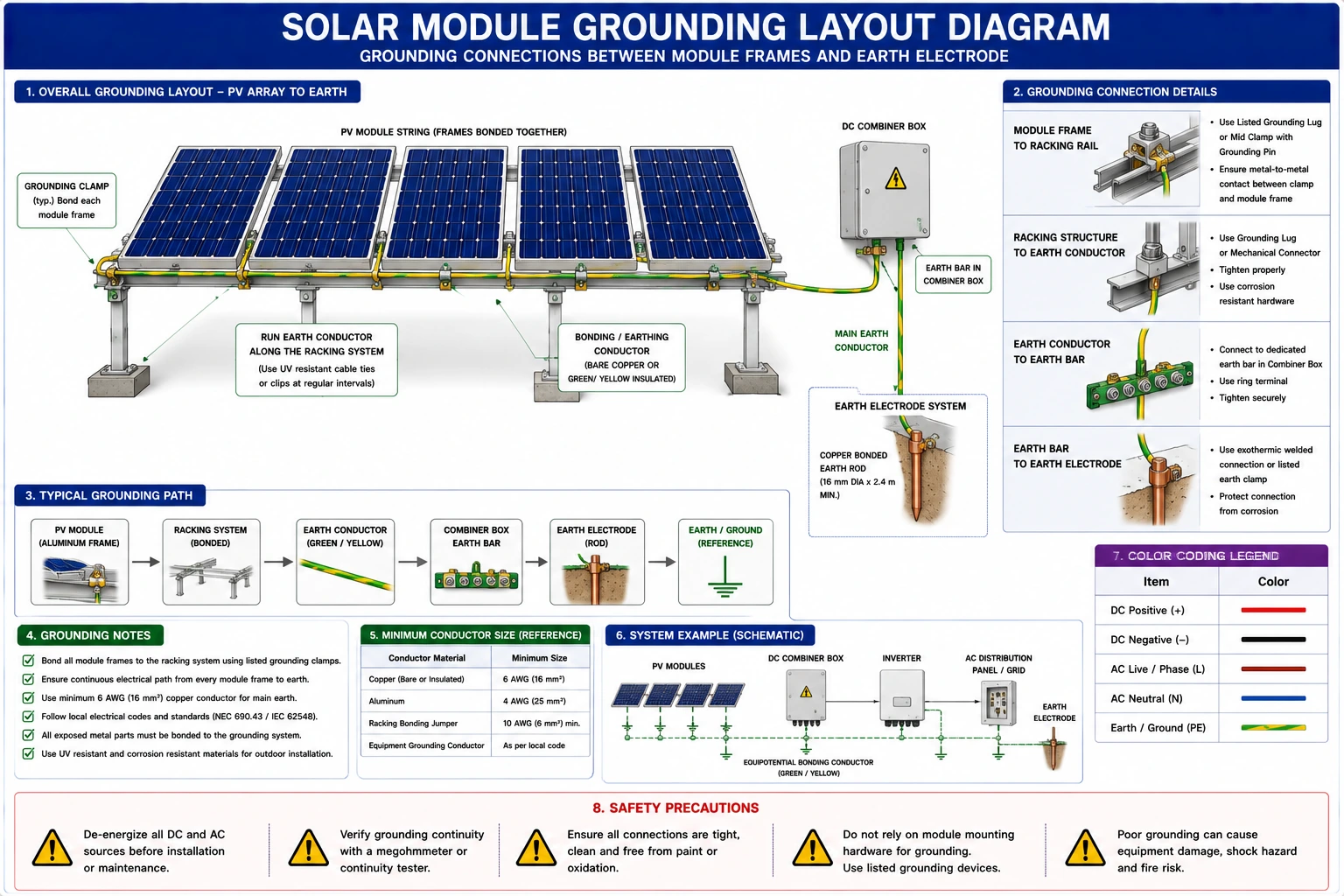
1. Solar Modules
The metallic frames of solar panels must be grounded.
Grounding helps:
- Prevent touch voltage hazards
- Protect against insulation faults
- Improve safety during maintenance
2. Mounting Structures
Solar mounting systems consist of metallic supports that must be electrically bonded and grounded.
Grounding protects:
- Structural components
- Installation personnel
- Connected equipment
3. Solar Inverters
Inverters contain sensitive electronic components that require proper grounding.
Grounding helps:
- Protect inverter electronics
- Improve surge protection
- Enhance system reliability
4. Combiner Boxes
Both AC and DC combiner boxes require grounding of metallic enclosures.
5. Battery Banks (Where Applicable)
Hybrid and off-grid systems require grounding of battery racks and associated equipment.
Main Components of a Solar Grounding System
Grounding Electrode
Commonly installed as:
- Ground rods
- Ground plates
- Ground grids
Purpose:
- Provides an earth connection
Grounding Conductor
- Connects equipment to the grounding electrode.
Common materials:
- Copper
- Tinned copper
- Copper-clad steel
Bonding Conductors
- Used to electrically connect metallic components.
Grounding Connectors and Clamps
- Provide secure grounding connections between equipment and conductors.
Grounding System Design Considerations
Before installation, evaluate:
- System size
- Site soil conditions
- Fault current levels
- Lightning exposure
- Applicable regulations
Grounding design should comply with project specifications and local electrical standards.
Tools Required for Grounding Installation
Electrical Tools
- Wire stripper
- Cable cutter
- Crimping tool
- Torque wrench
- Multimeter
Installation Tools
- Hammer drill
- Ground rod driving tool
- Measuring tape
- Spanners and wrenches
Testing Equipment
- Earth resistance tester
- Continuity tester
- Digital multimeter
Materials Required
- Ground rods
- Copper grounding conductor
- Grounding clamps
- Bonding jumpers
- Cable lugs
- Conduit and protective sleeves
Step-by-Step Procedure to Install Grounding for Solar Modules
Step 1 – Review Grounding Layout Drawing
Study:
- Earthing layout
- Single Line Diagram (SLD)
- Equipment grounding details
Identify grounding points for:
- Solar modules
- Structures
- Inverters
Step 2 – Install Grounding Electrode
Install ground rods or earth electrodes at designated locations.
Consider:
- Soil resistivity
- Grounding resistance requirements
Ensure proper depth and secure installation.
Step 3 – Install Grounding Conductor
Connect grounding conductors from equipment to the grounding electrode.
Use:
- Approved conductor sizes
- Corrosion-resistant materials
Step 4 – Ground Solar Module Frames
Connect all module frames using approved grounding clips or bonding devices.
Ensure:
- Continuous electrical path
- Secure connections
This step is essential for solar electricity generation safety.
Step 5 – Bond Mounting Structures
Interconnect metallic mounting components using bonding conductors.
Verify:
- Mechanical stability
- Electrical continuity
Step 6 – Ground the Solar Inverter
Connect inverter grounding terminals to the grounding system.
Follow:
- Manufacturer instructions
- Project specifications
Ensure proper tightening of grounding terminals.
Step 7 – Ground Combiner Boxes and Other Equipment
Ground:
- DC combiner boxes
- AC combiner boxes
- Junction boxes
- Distribution panels
Step 8 – Protect Grounding Conductors
Install conductors inside:
- Conduits
- Protective sleeves
- Cable trays
Prevent mechanical damage.
Step 9 – Label Grounding Conductors
Clearly identify grounding conductors for future maintenance. Proper labeling supports efficient troubleshooting.
Step 10 – Perform Continuity Testing
Verify:
- Module grounding continuity
- Structure bonding continuity
- Inverter grounding continuity
Step 11 – Conduct Earth Resistance Testing
Measure grounding resistance using an earth resistance tester. Acceptable values depend on project requirements and local standards.
Grounding Requirements for Solar Modules
Proper module grounding should:
- Bond all module frames together
- Use approved grounding hardware
- Ensure corrosion-resistant connections
Failure to ground modules properly may result in equipment damage and safety risks.
Grounding Requirements for Mounting Structures
All metallic structural components should be electrically bonded.
Key considerations:
- Continuous grounding path
- Corrosion protection
- Mechanical integrity
Grounding Requirements for Solar Inverters
Inverter grounding should:
- Follow manufacturer guidelines
- Connect directly to the grounding network
- Include surge protection integration where applicable
Testing and Verification After Grounding Installation
1. Ground Continuity Test
Confirms electrical continuity throughout the grounding system.
2. Earth Resistance Test
Measures effectiveness of the earth connection.
3. Visual Inspection
Check:
- Connection quality
- Corrosion protection
- Proper routing
4. Mechanical Tightness Verification
Ensure all grounding terminals are secure.
5. Documentation and Reporting
Record:
- Grounding conductor sizes
- Resistance values
- Inspection findings
Conclusion
A properly installed grounding system is one of the most important safety features in a solar PV installation. By grounding solar modules, mounting structures, and inverters correctly, installers can protect equipment, ensure personnel safety, improve system reliability, and comply with electrical regulations.
Grounding and bonding are essential elements of renewable solar systems and safe solar electricity generation. Furthermore, following recommendations from the Ministry of New and Renewable Energy helps ensure that installations meet industry standards and safety requirements.
By implementing proper grounding practices, conducting thorough testing, and maintaining high installation quality, solar professionals can optimize solar panel system cost, improve renewable energy technology performance, and support the long-term success of residential, commercial, industrial, and utility-scale solar projects.
FAQs
Q1. Why is grounding important in solar PV systems?
Ans: Grounding protects personnel and equipment from electrical faults, surge currents, and lightning-related damage.
Q2. Which solar components require grounding?
Ans: Solar modules, mounting structures, inverters, combiner boxes, and battery systems typically require grounding.
Q3. What materials are commonly used for grounding conductors?
Ans: Copper, tinned copper, and copper-clad steel are commonly used because of their conductivity and durability.
Q4. How is the grounding system performance verified?
Ans: Through continuity testing, earth resistance testing, visual inspections, and documentation review.
Q5. Does proper grounding affect solar panel system cost?
Ans: Yes. Proper grounding reduces equipment failures, maintenance costs, and downtime, helping optimize overall project costs.

6 Upcoming Renewable Energy Events in India You Should Attend
The World Environment Expo, 2022 is a business platform that allows national and international equipment
Solar PV String Voltage and Current Measurement Guide
A complete guide to DC voltage and current testing for solar PV strings and arrays, ensuring accurate performance verification during commissioning.

Basics of Electricity and Electric Terms and Laws Required for Renewable Energy – Complete Guide
Understanding the basics of electricity is essential for anyone working in renewable energy and solar power systems. From voltage and current to Ohm’s Law and power calculations, strong electrical fundamentals ensure safe and efficient solar installations. This complete guide explains key electrical terms, units, formulas, and laws required for renewable energy professionals, students, and solar PV installers.
Should You Replace Solar Panels with Solar Shingles?
Discover how solar batteries store excess energy, maximize your solar system’s efficiency, and provide reliable power during outages. Learn about the types, benefits, lifespan, and maintenance tips to make the most of your solar investment.
Utility Disconnect Installation in Solar PV Systems Guide
A step-by-step guide to utility disconnect installation in solar PV systems, including wiring, safety measures, and installation best practices.
Haryana’s GEOA 2025: A Boost for Captive Solar Plants and Wind Energy Developers
Haryana’s GEOA 2025 paves the way for growth in captive wind and solar energy projects with investor-friendly reforms.
AVANCIS Pushes CIGS Thin-Film Solar Modules Beyond 20% Efficiency
AVANCIS achieves a breakthrough in solar technology, pushing CIGS thin-film modules beyond 20% efficiency for higher performance and energy output.
Solar Cable Termination: Tools, Steps & Best Practices
A complete guide to cable continuity testing in solar installations, including testing procedures, tools, and safety best practices.