
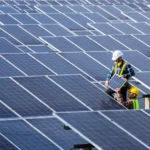
AVANCIS Pushes CIGS Thin-Film Solar Modules Beyond 20% Efficiency
A team of researchers from AVANCIS, a solar module manufacturer in Munich, Germany, has broken the 20% efficiency barrier for CIGS thin-film modules measuring 30 cm x 30 cm. The previous record, also set by AVANCIS, was 19.8%. The new efficiency of 20.3% was independently certified by the National Renewable Energy Lab.
The company’s researchers made essential improvements to the materials used in the solar panels, including optimizing a material called Ga-rich Cu (In, Ga) (S, Se)2 through a special chemical process. They also treated the material with sodium after it was deposited and used a special zinc-based buffer that did not contain cadmium.
The advancements in the manufacturing process can be applied to AVANCIS’ ongoing product series, which means they can make more solar panels with these improvements. The company said these large solar panels give architects much freedom to design solar facades. Its color technology allows the panels to have dynamic colors, creating an interplay of light and color in architectural designs.
In March, Midsummer, a Swedish developer, in collaboration with researchers at the University of California, Los Angeles, developed a four-terminal perovskite-CIGS tandem solar cell that has demonstrated an efficiency of 24.9%. This is the highest efficiency ever achieved for a CIGS solar cell.
The development of more efficient CIGS solar cells is a major step forward for the solar industry. CIGS solar cells are thin, flexible, and lightweight, making them ideal for a variety of applications, including building-integrated photovoltaics (BIPV) and rooftop solar systems. The higher efficiency of these new cells will make them more cost-competitive with other types of solar cells, such as crystalline silicon cells. This could help to accelerate the adoption of solar energy and contribute to a cleaner, more sustainable future.
Suggested Articles

Developers fear unfair state-specific levies will make solar more expensive
Developers in India are concerned that state-specific levies on solar projects could increase costs, slow adoption, and impact the growth of renewable energy across residential, commercial, and industrial sectors.
How a String Monitoring Box Works in Residential Solar Systems
Understand how a string monitoring box helps track and protect your home solar panels for maximum efficiency and safety

100 kW Solar Power Plant in Indore – Latest Cost, Subsidy & Payback Period
A 100 kW solar plant in Indore costs around ₹40–55 lakh in, offering annual savings of up to ₹10 lakh and a payback period of 4–6 years. Learn about installation, maintenance, and ROI to make your solar investment worthwhile.

Solar O&M Services: How to Ensure Peak Performance & Maximum Power for Solar System
Discover how Solar O&M services keep your solar system running at its best. From routine maintenance to performance monitoring, ensure maximum power and efficiency.

Solar ROI for Commercial & Industrial Projects in India: Cost, Payback & Profits
Learn how commercial and industrial solar projects deliver strong ROI for businesses in India through lower energy costs, faster payback, and long-term profit generation.

Solar Energy Gadgets in India: 9 Cool Devices to Explore
Explore 9 innovative solar-powered gadgets in India that make daily life more sustainable, energy-efficient, and eco-friendly.

Researchers Propose New Way to Make Nuclear Power Plants Safer
Researchers propose innovative methods to enhance the safety of nuclear power plants, aiming to reduce risks and improve operational security.

Different Technical Parameters and Performance of a Solar PV Module
Earthing and lightning protection are critical safety components in solar PV installations. This guide explains their importance, types, components, and best practices for solar installers.