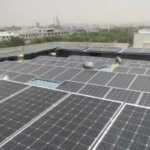
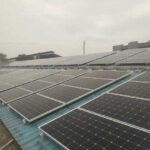
For commercial enterprises, schools, hospitals, and large rooftop spaces in Delhi, installing a 100 kW solar power plant is a worthwhile investment. It offers high electricity generation, strong savings, and aligns with the city’s push for cleaner energy. At Smart Roof Solar, we help you assess the solar installation charges, optimize design, and access subsidies to make your solar project truly impactful.
What is a 100 kW Solar Power Plant?
A 100 kW solar plant delivers peak output under ideal conditions, and in Delhi’s high-sunlight environment, this translates to significant generation annually. We design these systems using high-quality modules and inverters so your solar energy installation cost turns into long-term value, reducing your dependency on grid power and cutting your monthly electricity bills significantly.
Price & Cost Breakdown for a 100 kW Plant in Delhi (2025)
Capacity | Estimated Cost (excluding GST) |
50 kW in Delhi | Starting from ₹12,50,000* |
100 kW in Delhi | Starting from ₹24,00,000* |
150 kW in Delhi | Starting from ₹35,25,000* |
200 kW in Delhi | Starting from ₹47,00,000* |
*Prices quoted are indicative starting rates for 100 kW solar installations and may vary based on project-specific requirements, including ground mount or tin-shed structures, RC installation types, additional accessories like DG sync, safety rails, etc. Final pricing will be confirmed upon detailed site evaluation and project scope assessment.
Generation, Payback & Savings
With Delhi’s good solar irradiation and proper design, a 100 kW plant can generate around 1.2-1.4 lakh units (kWh) annually. If your commercial tariff is ₹8-₹11 per kWh, your annual savings on solar electricity could be ₹9-₹15 Lakh. With that, the payback period would typically be 3-4 years, an excellent return on investment.
When you compare with conventional power, the cost of solar per kWh installed becomes very favorable, especially when you account for subsidies, net metering, and rising grid tariffs. Over the system’s 25-30-year life, your effective cost keeps dropping further.
Why Install a 100 kW Solar Plant in Delhi?
This size is ideal for:
- Factories and manufacturing units are looking to curb high daytime power bills
- Corporate offices, hotels, and hospitals with large roofs
- Educational institutions and large commercial complexes
- Ground-mounted solar plants on campus or industrial estates
Such installations reduce your total reliance on grid power, help in building sustainability credentials, and push you ahead in renewable energy technology adoption.
Subsidy, Incentives & GBI for Delhi
Delhi’s solar policy offers several incentives that affect your economics significantly:
Under the PM Surya Ghar: Muft Bijli Yojana, residential systems get central subsidies: ₹30,000 per kW up to 2 kW, ₹18,000 per kW for additional up to 3 kW, capped at ₹78,000.
At the state level, under the Delhi Solar Energy Policy 2023, capital subsidy for residential is ₹10,000 per kW up to 3 kW, capped at ₹30,000.
The policy also offers Generation-Based Incentive (GBI): ₹3 per kWh for plants up to 3 kW, ₹2 per kWh for 3-10 kW, and ₹1 per kWh for C&I (first 200 MW) under Delhi.
To know in detail, check out our blog – New Rates of Solar Subsidy in Delhi 2025 – Smart Roof Solar
For a 100 kW commercial installation, while the direct residential subsidies won’t apply, your savings from avoided electricity bills, exemption from certain charges, net-metering benefits, and scale advantages combine to improve your ROI significantly.
Factors Affecting Your Cost & Savings
Panel Efficiency and Type
Higher efficiency reduces the solar panel area per kW and may reduce overall installation cost.
Roof Condition & Orientation
Flat roof, shading, and height all affect the mounting and cost of solar roof installation cost.
Cabling & Quality
Good cabling reduces losses, impacting your cost of solar per kWh installed.
Monitoring & O&M
Quality O&M maintains high generation and reduces the long-term total cost of solar installation.
Tariff & Net metering terms
Longer banking, export credits, and favorable rates mean better economics.
Why Choose Smart Roof Solar in Delhi
With our turnkey services:
- Customized design & flawless installation
- Transparent pricing, clear about the cost of solar panels, solar panel system cost, smart solar panel price
- Subsidy guidance & net-metering support
- O&M and monitoring services for lifetime performance
Our mission: making solar energy economical, reliable, and sustainable for both homes and business use across Delhi.
Conclusion
A 100 kW solar power plant in Delhi isn’t just a green initiative, it’s a smart business move. With rising tariffs, improved policy support, and professional installation, the numbers work better each year.
Founded on high-quality components, optimized design, and strong O&M, your system turns from cost to asset, delivering renewable energy and solar energy benefits for decades.
Contact Smart Roof Solar today for a detailed quote, and let’s explore how we can customize a 100 kW rooftop solar system for you, optimizing solar installation cost per kWh, maximizing savings, and ensuring a clean energy future.
FAQs
Q1. Is battery backup recommended for a 100 kW commercial setup?
Ans: It’s optional, most commercial users prefer grid-tied systems for better ROI instead of expensive battery banks.
Q2. What is the lifespan of a 100 kW solar plant?
Ans: A well-maintained plant can last 25-30 years with inverter replacements around every 10-12 years.
Q3. Are there financing or loan options available for commercial solar projects?
Ans: Yes, several banks and NBFCs offer solar loans or lease models for commercial installations. Check our blog to know more about financing options – Solar loans subsidies EMI plans financing made easy
Q4. How does dust and pollution in Delhi affect solar generation?
Ans: Dust reduces efficiency by 5-10%; regular cleaning maintains optimal performance.
Q5. Do you need government approval to install a 100 kW system?
Ans: Yes, approval from the local DISCOM and adherence to net metering norms are required.